🟦 What is High Blood Pressure?
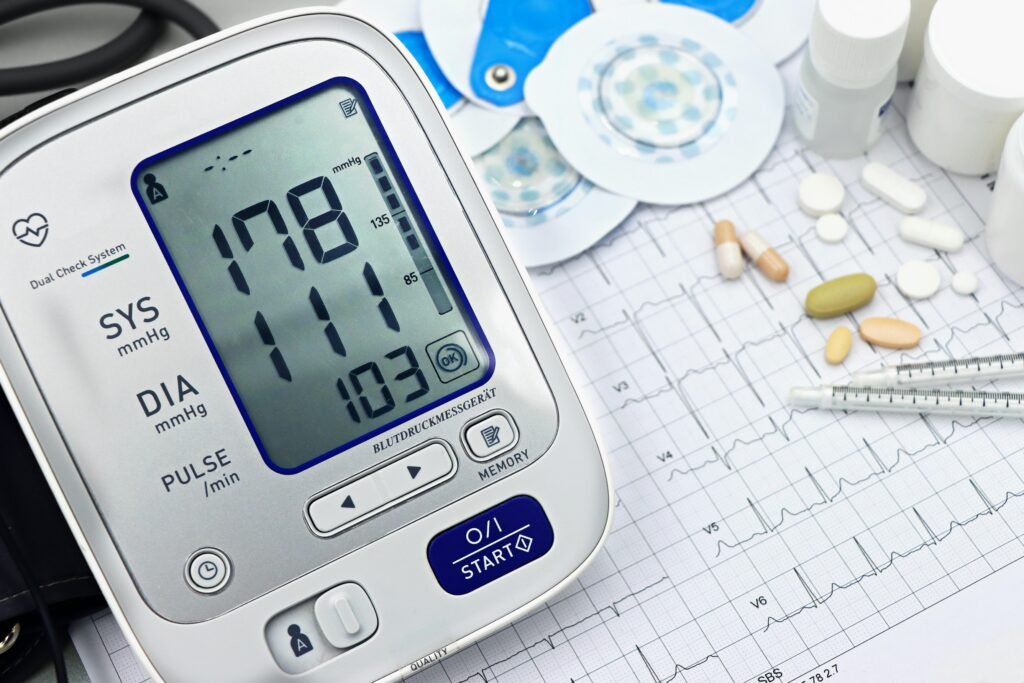
Blood pressure is the force of blood pushing against the walls of your arteries. It is measured using two values: systolic pressure (upper number), which is the pressure when the heart beats, and diastolic pressure (lower number), which is the pressure when the heart rests. Normal blood pressure is around 120/80 mmHg. High blood pressure (hypertension) is usually diagnosed when readings are consistently 140/90 mmHg or higher. In some individuals, 130/80 mmHg or higher may be considered high based on clinical guidelines and overall risk.
🟦 Symptoms
High blood pressure often does not cause noticeable symptoms. However, in some cases, people may experience headache, shortness of breath, a feeling of pressure in the head, or nosebleeds (which are uncommon). Many people have no symptoms at all, which is why regular blood pressure checks are important.
🟦 Causes & Risk Factors
Common causes and contributing factors include high salt (sodium) intake, lack of physical activity, excess body weight, chronic stress, family history (genetics), smoking, excessive alcohol use, and an unhealthy diet.
🟦 Care & Management (Without Medicines)
Lifestyle changes can help control blood pressure. These include reducing salt intake in the daily diet, engaging in regular physical activity such as walking, maintaining a healthy body weight, eating a balanced diet rich in fruits and vegetables, managing stress through proper sleep and relaxation techniques, avoiding smoking, and limiting alcohol intake. These steps support overall cardiovascular health.
🟦 When to Seek Medical Care
Medical attention should be sought if there is severe or persistent headache, chest pain, difficulty breathing, sudden vision changes, or very high blood pressure readings, especially if they occur repeatedly. These may require immediate medical evaluation.
🟦 Possible Future Risks (If Uncontrolled)
If not managed properly, high blood pressure can increase the risk of heart disease (including heart attack), stroke, kidney damage, and vision problems.
🟦 Prevention Tips
Regularly check your blood pressure, maintain a healthy lifestyle, stay physically active, follow a balanced diet, and manage stress effectively.
High blood pressure can be silent but serious if ignored. Regular monitoring and healthy habits can help reduce risks.
💙 Qerava Health provides home BP monitoring and healthcare support at your doorstep.